CS 101 Redesign: Teaching First-Year Engineers in the Age of AI
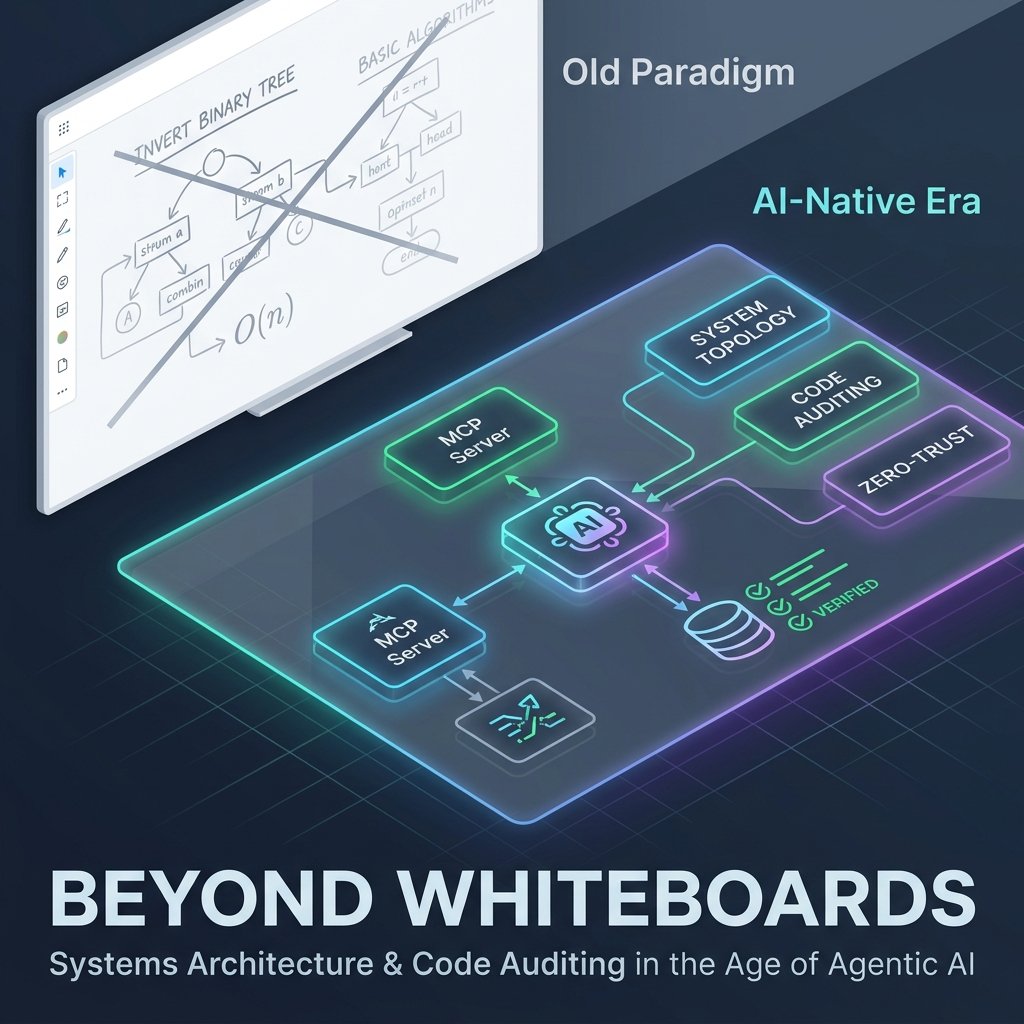
Meta Description: Discover how universities are redesigning CS 101 to focus on computational thinking, debugging, and verification rather than syntax mechanics.
For generations, the first day of an introductory computer science course (CS 101) followed a ritual: open a text editor, type printf("Hello, World!"); or print("Hello, World!"), miss a semicolon or a quote mark, panic at the resulting compiler error, and spend twenty minutes learning how to fix it.
The core mission of traditional introductory programming was clear: drill syntax mechanics, enforce compiler compliance, and build basic muscle memory for writing lines of procedural code from scratch.
That model has hit an invisible wall.
In an era where every first-year student has ambient access to large language models (LLMs) and integrated AI coding assistants embedded directly into their browsers and IDEs, traditional homework assignments—like writing a loop to reverse an array or computing Fibonacci numbers—can be solved in seconds. The traditional tools for enforcing academic integrity are failing, not because students are more dishonest, but because non-deterministic code generation makes traditional plagiarism detection tools structurally obsolete.
Computer science educators, academic deans, and EdTech curriculum designers face a fundamental inflection point: How do we teach foundational engineering when syntax generation is instant, free, and universal?
The answer requires a complete redesign of CS 101. Rather than fighting AI access, leading universities are rebuilding introductory computing around computational thinking, code reading, visualized execution, and verification-driven assessment.
💡 Key Takeaways
- The Death of Syntax Bottlenecks: Modern CS 101 moves away from syntax memorization and compiler error wrestling to focus on logic, state, and system behavior.
- Reading Before Writing: Code comprehension, trace analysis, and debugging are replacing manual line-by-line syntax generation as the primary introductory skill.
- Computational Thinking Over Syntax: Flowcharts, state machines, and language-agnostic pseudocode take center stage to build mental models before students touch an AI generator.
- Verification as Grading Metric: Grading rubrics are shifting away from whether code simply executes toward test suite completeness, boundary condition coverage, and edge-case discovery.
1. The Crisis of Traditional Integrity: Why Plagiarism Detection Failed
For decades, academic integrity in introductory CS relied on static code comparison algorithms like MOSS (Measure Of Software Similarity). These tools looked for structural similarities, AST (Abstract Syntax Tree) matches, and variable-renaming patterns across student submissions.
Generative AI shattered this paradigm overnight.
Because LLMs generate code probabilistically based on context, temperature settings, and dynamic sampling, ten students using the same prompt will receive ten distinct implementations. The output isn’t copied from a peer or a centralized repository; it is synthesized on the fly.
+-----------------------------------------------------------------------+
|                   ACADEMIC EVALUATION PARADIGM SHIFT                   |
+-----------------------------------------------------------------------+
|  TRADITIONAL CS 101               |  AI-NATIVE CS 101                 |
+-----------------------------------+-----------------------------------+
|  • Write basic syntax by hand     |  • Read, trace, and audit code    |
|  • Graded on compiler output      |  • Graded on test completeness    |
|  • Static similarity checks (MOSS)|  • Live architectural defense     |
|  • Syntax errors as primary blocker| • Logic & state as main focus     |
+-----------------------------------------------------------------------+
When academic deans respond by banning AI tools or forcing students back to paper-and-pencil exams, they create a dangerous disconnect between the classroom and modern engineering reality. Banning the primary tool of modern professional development does not preserve rigorous education—it merely delays the student’s preparation for real-world systems engineering.
The solution isn’t to police ambient AI access; it is to change what we ask students to do.
[External Link Suggestion: ACM Special Interest Group on Computer Science Education (SIGCSE) -> https://sigcse.org]
2. From “Write Code” to “Read and Verify Code”
In traditional language acquisition (such as learning conversational Spanish or Mandarin), reading comprehension always precedes fluent speech and complex writing. You learn to recognize vocabulary, parse sentence structures, and understand context before you compose essays.
In computer science, education historically inverted this principle: we asked students to write code from week one, despite them having zero mental model of how the underlying runtime engine parses or executes that code.
┌──────────────────────────────────────────────────────────────────┐
│                   THE READ-FIRST LEARNING CYCLE                  │
├──────────────────────────────────────────────────────────────────┤
│                                                                  │
│  ┌───────────────────────┐          ┌─────────────────────────┐  │
│  │  1. Read & Trace      │ ────────►│  2. Audit & Predict     │  │
│  │  (Understand State)   │          │  (Find Failure Points)  │  │
│  └───────────────────────┘          └─────────────────────────┘  │
│                                                  │               │
│                                                  ▼               │
│  ┌───────────────────────┐          ┌─────────────────────────┐  │
│  │  4. System Refactor   │ ◄────────│  3. Verify with Tests   │  │
│  │  (Guided AI Co-author)│          │  (Build Test Harnesses) │  │
│  └───────────────────────┘          └─────────────────────────┘  │
│                                                  │               │
└──────────────────────────────────────────────────────────────────┘
In an AI-native CS 101 curriculum, reading competence precedes writing competence.
Instead of asking a first-year student to write a sorting algorithm or a string parser from scratch, early assignments focus on code comprehension and auditing:
- Code Tracing: Students are given a 30-line code snippet (written by a peer, an instructor, or an AI) and asked to manually trace variable values through every iteration of a loop.
- Behavior Prediction: Students analyze a block of code and predict its output for normal, boundary, and malformed inputs before running it.
- Flaw Auditing: Students receive three different AI-generated implementations of a problem and must determine which one contains a subtle off-by-one error or memory leak.
By centering the curriculum on reading and auditing, students develop a strong mental model of execution mechanics. When they subsequently use AI tools to generate code, they possess the critical eye needed to evaluate whether the generated code is correct, efficient, and safe.
3. Teaching Computational Thinking First: Pseudocode, State Machines, and Flowcharts
When syntax memorization is no longer the gateway to programming, what takes its place in the first six weeks of the semester? Language-agnostic computational thinking.
Before introducing Python, C++, or Java syntax, redesigned CS 101 courses focus on how to decompose complex real-world problems into deterministic steps.
+--------------------------------------------------------------------+
|               COMPUTATIONAL THINKING BEFORE SYNTAX                 |
+--------------------------------------------------------------------+
|  [Problem Statement]                                               |
|           │                                                        |
|           ▼                                                        |
|  [Decomposition] ──► Break into discrete sub-problems               |
|           │                                                        |
|           ▼                                                        |
|  [State Modeling] ──► Map inputs, transitions, and invariant states |
|           │                                                        |
|           ▼                                                        |
|  [Flowchart / Pseudocode] ──► Define deterministic control flow    |
|           │                                                        |
|           ▼                                                        |
|  [AI-Assisted Code Synthesis] ──► Generate implementation target   |
+--------------------------------------------------------------------+
Key Pedagogical Pillars in Week 1–6:
- Finite State Machines (FSMs): Teaching students how to model systems (like a turnstile, a vending machine, or an authentication flow) as explicit states, inputs, and transitions.
- Control Flow Diagrams: Using standardized flowcharts to visually map branch logic, loops, and early exits before writing any text.
- Structured Pseudocode: Enforcing strict, natural-language algorithmic descriptions that force students to solve the logical problem before wrestling with language-specific quirks.
When a student learns to think in state transitions and control flow, switching languages becomes trivial. Whether the target implementation is Python, Rust, or Go, the core computational logic remains identical.
[Internal Link Suggestion: Designing Robust State Machines for Software Architecture]
4. Visualizing Execution Pipelines: Debuggers Meets AI Assistants
One of the biggest risks of ambient AI access in education is the “black box effect”: a student prompts an AI tool, receives a working block of code, pastes it into their submission window, and has no idea how memory, stacks, or registers processed that code.
To counteract this, modern CS 101 labs pair AI coding assistants directly with visual debuggers and execution tracers.
Integrating Debugging into the Learning Workflow
When a student uses AI to generate an implementation for an assignment, the lab environment requires them to run the code inside a visual tracer (such as Python Tutor or an integrated IDE stepping debugger).
Students must answer key diagnostic questions during execution:
- What is happening on the call stack during this recursive call?
- Where is this object allocated in memory (Heap vs. Stack)?
- Why did the pointer reference change on line 14?
Python
# Example Lab Exercise: Trace and Verify AI-Generated Code
# Task: Student must identify why this AI-generated function fails on empty inputs

def calculate_average(numbers: list[float]) -> float:
    # Student must trace execution when numbers = []
    total = 0.0
    for num in numbers:
        total += num
    return total / len(numbers)  # Triggers ZeroDivisionError!

# Student Action: Write an assertion test to catch the boundary condition
def test_calculate_average():
    assert calculate_average([10.0, 20.0]) == 15.0
    # Student adds edge case test handling empty list gracefully
By making execution visible, educators turn AI from a shortcut into an explanatory tool. The AI generates the candidate code, but the visual debugger reveals the runtime mechanics.
5. The New Assessment Matrix: Grading Verification Over Code Generation
If writing 50 lines of syntax is no longer a meaningful homework assignment, how do CS departments evaluate student mastery? The answer lies in restructuring the grading rubric away from code execution toward verification, test coverage, and oral defense.
| Traditional CS 101 Assessment | AI-Native CS 101 Assessment Matrix | Weight Shift |
| Syntax Correctness (Does it compile?) | Test Suite Completeness (Did you cover all boundary cases?) | Decreased → 30% Higher Emphasis on Testing |
| Code Implementation (Writing lines by hand) | Adversarial Code Auditing (Finding hidden bugs in provided code) | Decreased → Replaced by Auditing Exercises |
| Static Homework Submissions | Live Trace Defenses (Explaining code execution line-by-line) | Increased → Core Oral/In-Person Component |
| Manual Algorithm Writing | System Specification & Prompt/Context Design | Shifted → Focus on Logical Specification |
The “Test Suite First” Submission Model
In the redesigned assignment pipeline, students aren’t graded on whether their code works. They are provided an unverified piece of software and graded on the quality of the unit tests they write to validate it.
A student earns an $A$ grade when their test suite successfully identifies:
- Edge-case failures (empty strings, negative numbers, null pointers).
- Boundary condition breaches (integer overflow, array out-of-bounds).
- Performance bottlenecks ($O(n^2)$ behavior on large datasets).
[External Link Suggestion: IEEE Computer Society Educational Activities -> https://www.computer.org/education]
6. Frequently Asked Questions (FAQ)
Doesn’t skipping syntax memorization hurt foundational understanding?
No. Syntax memorization is often confused with foundational understanding, but they are distinct skills. Syntax is merely the arbitrary surface convention of a specific programming language; foundational understanding consists of logic, memory management, data structures, and control flow. By reducing the time spent fighting syntax errors in week one, students spend more time mastering core computational concepts.
How do educators prevent students from using AI to write their unit tests too?
By using adversarial testing frameworks and live defenses. In lab settings, instructors present students with “black-box” binaries or secret implementations containing hidden bugs. Students must write unit tests against the mystery interface without seeing the underlying code. The student’s grade depends on whether their tests surface the secret bugs, a task that requires deep logical reasoning about system boundaries.
What IDEs and environments are best suited for an AI-native CS 101 course?
Educators are increasingly adopting browser-based, interactive notebook environments (like JupyterHub or custom Replit setups) integrated with visual step-debuggers and locked-down LLM sandboxes. These environments log the student’s process—allowing instructors to see how a student prompts, tests, iterates, and debugs in real time rather than just evaluating the final output file.
The Path Ahead for Computer Science Education
Redesigning CS 101 for the AI-native era is not about lowering expectations or capitulating to automated tools. It is about elevating the discipline of software engineering education to match the reality of modern computing.
By shifting our focus from syntax mechanics to computational thinking, code auditing, and verification, we prepare first-year students to be what the future demands: not human syntax parsers, but articulate, rigorous, and security-minded systems architects.