WebAssembly (Wasm) Beyond the Browser: Server-Side Runtimes and Cloud-Native Apps
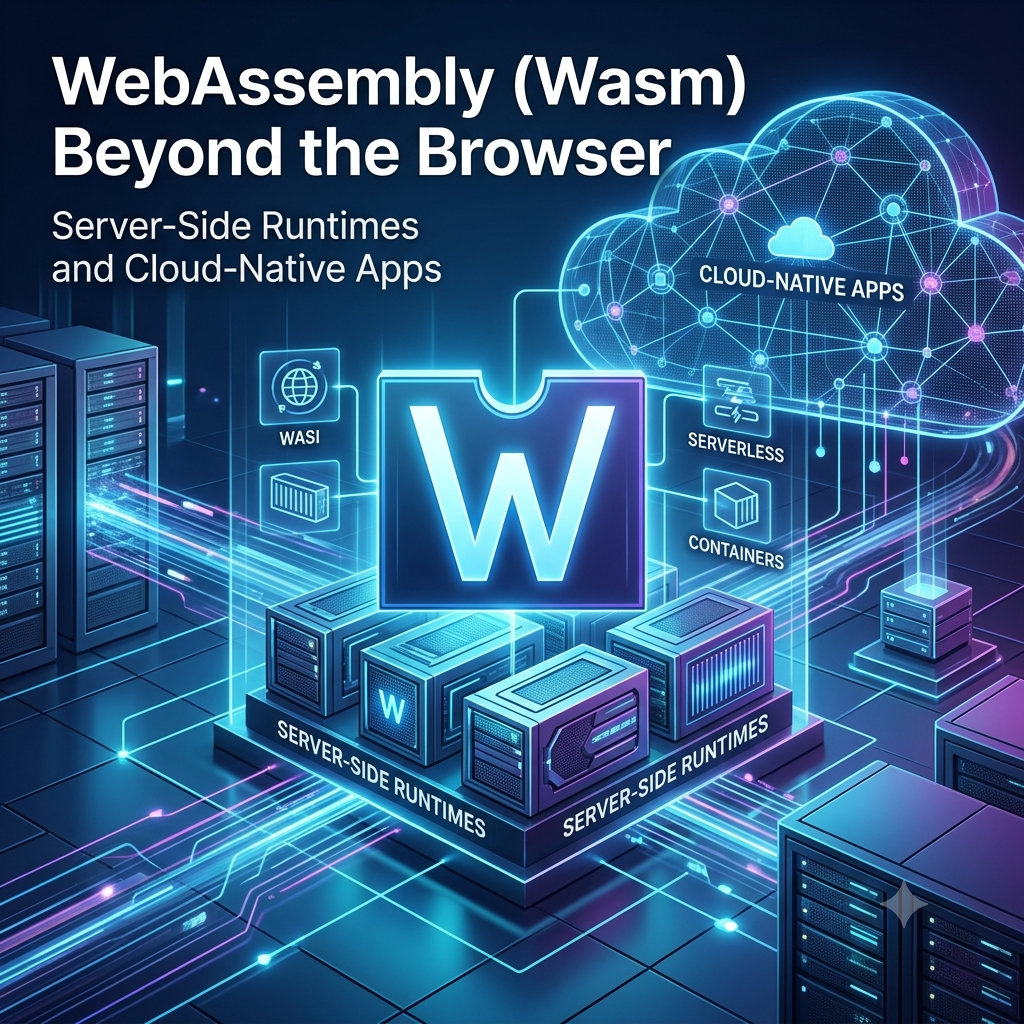
Meta Description: Discover how WebAssembly (Wasm) is transforming server-side computing. Learn about WASI, Wasmtime, Spin, and building light, ultra-fast cloud microservices.
┌────────────────────────────────────────────────────────────────────────┐
│ VIRTUAL MACHINES VS. CONTAINERS VS. WASM │
│ │
│ HEAVY: VIRTUAL MACHINE (Gigabytes / Minutes Startup) │
│ ┌────────────────────────────────────────────────────────────────┐ │
│ │ App Logic │ Libs │ Guest OS (Linux Kernel) │ Hypervisor / HW │ │
│ └────────────────────────────────────────────────────────────────┘ │
│ │
│ LIGHT: DOCKER CONTAINER (Megabytes / Seconds Startup) │
│ ┌────────────────────────────────────────────────────────────────┐ │
│ │ App Logic │ User-space Libs │ Shared Host Kernel │ │
│ └────────────────────────────────────────────────────────────────┘ │
│ │
│ ULTRA-LIGHT: WASM MODULE (Kilobytes / Milliseconds Startup) │
│ ┌────────────────────────────────────────────────────────────────┐ │
│ │ Compiled Wasm Bytecode (Sandboxed) │ Wasm Runtime (Wasmtime/WASM)│ │
│ └────────────────────────────────────────────────────────────────┘ │
└────────────────────────────────────────────────────────────────────────┘
When WebAssembly (Wasm) was introduced in 2017, its primary mission was to bring near-native execution performance to web browsers. By compiling languages like C++, Rust, and Go into a compact binary format, developers could run computationally intensive workloads—such as 3D rendering, video editing, and cryptography—directly inside client-side browser engines.
However, WebAssembly’s core architectural traits—sandboxed execution, architecture-agnostic binary compilation, sub-millisecond cold starts, and minimal memory footprints—made it appealing far beyond the browser.
Today, WebAssembly is driving a major shift in backend engineering, edge computing, and cloud-native infrastructure. By coupling Wasm runtimes with the WebAssembly System Interface (WASI), developers can deploy secure, lightweight workloads across multi-cloud environments, edge nodes, and Kubernetes clusters without the overhead of heavy container images or guest operating systems.
💡 Key Takeaways
- Next-Gen Cloud Isolation: Wasm offers strict memory-safe sandboxing at the process level without needing full Linux container environments.
- The WASI Standard: The WebAssembly System Interface (WASI) exposes standardized OS abstractions (filesystems, network sockets, clocks) safely to Wasm binaries.
- Instant Cold Starts: Server-side Wasm modules launch in sub-milliseconds, making them ideal for high-density Serverless and Edge computing.
- Complementary to Containers: Wasm does not instantly replace Docker; instead, it integrates into cloud ecosystems via OCI registries and custom Kubernetes runtimes (e.g., runwasi).
Why WebAssembly on the Server?
To understand why backend engineers are adopting Wasm, consider the operational constraints of traditional cloud deployment models:
┌────────────────────────────────────────────────────────────────────────┐
│ COMPUTE ISOLATION TRADEOFFS │
│ │
│ Compute Unit Startup Time Memory Overhead Security Isolation│
│ ──────────── ──────────── ─────────────── ──────────────────│
│ Virtual Machine ~30–60s ~512MB+ Hypervisor │
│ Docker Container ~1–5s ~50–200MB Linux Namespaces │
│ Wasm Module < 1ms < 5MB Capability Sandbox│
└────────────────────────────────────────────────────────────────────────┘
While Docker containers revolutionized software delivery by packaging code alongside runtime dependencies, a container image still carries a significant slice of a user-space operating system (glibc libraries, package managers, shell utilities).
The WebAssembly Advantage
- Sub-Millisecond Cold Starts: Wasm binaries initialize almost instantly because they don’t require spawning virtual operating system namespaces or initializing guest kernels.
- Polyglot Portability: Write business logic once in Rust, C, C++, Go, or Python, compile it to a .wasm binary target, and run it anywhere—on ARM64, x86_64, or RISC-V hardware architectures without re-compiling.
- Capability-Based Security: By default, a compiled Wasm binary is completely isolated in a sandboxed memory space. It cannot access host memory, read environment variables, open network sockets, or modify files unless explicitly granted permissions by the host runtime.
WASI: Bringing OS Capabilities to the Sandbox
Browser-based Wasm interacts with the world via JavaScript APIs (DOM manipulation, Fetch API). On the server, WebAssembly requires a standardized interface to communicate directly with the host operating system.
Enter WASI (WebAssembly System Interface).
┌────────────────────────────────────────────────────────────────────────┐
│ WASI ARCHITECTURE MODEL │
│ │
│ Compiled Wasm Module (Rust / Go / C++) │
│ ┌────────────────────────────────────────────────────────────────┐ │
│ │ Capability Requests (e.g., read_file, open_socket) │ │
│ └───────────────────────────────┬────────────────────────────────┘ │
│ │ WASI System Calls │
│ ▼ │
│ Standalone Wasm Runtime (Wasmtime / WasmEdge) │
│ ┌────────────────────────────────────────────────────────────────┐ │
│ │ Capability Verification Engine (Checks host grants) │ │
│ └───────────────────────────────┬────────────────────────────────┘ │
│ │ Native OS API Operations │
│ ▼ │
│ Host Operating System (Linux / macOS / Windows) │
└────────────────────────────────────────────────────────────────────────┘
WASI establishes a capability-based system interface that allows Wasm applications to invoke OS functions safely. Instead of giving a process unrestricted access to the host environment, WASI uses a capability model: the runtime administrator must explicitly grant capabilities (such as opening specific directory paths or binding to specific IP ports) when executing the module.
Hands-On Implementation: Building a Microservice in Rust with Fermyon Spin
Let’s build a server-side WebAssembly microservice using Rust and Fermyon Spin—an open-source framework designed to build and run serverless Wasm microservices.
Step 1: Rust Microservice Application Logic (src/lib.rs)
Rust
use spin_sdk::http::{IntoResponse, Request, Response, Router};
use spin_sdk::http_component;
use serde_json::json;
/// Entry point macro for the Spin WebAssembly HTTP Component
#[http_component]
fn handle_request(req: Request) -> anyhow::Result<impl IntoResponse> {
let mut router = Router::new();
router.get(“/api/v1/health”, |_req, _params| {
Ok(Response::builder()
.status(200)
.header(“content-type”, “application/json”)
.body(json!({
“status”: “HEALTHY”,
“runtime”: “WebAssembly/WASI”,
“cold_start_latency_ms”: 0.2
}).to_string())
.build())
});
router.get(“/api/v1/greet/:name”, |_req, params| {
let name = params.find(“name”).unwrap_or(“Developer”);
Ok(Response::builder()
.status(200)
.header(“content-type”, “text/plain”)
.body(format!(“Hello, {}! Executing safely inside a server-side Wasm sandbox.”, name))
.build())
});
Ok(router.handle(req))
}
Step 2: Spin Manifest Configuration (spin.toml)
This configuration file specifies how the Wasm binary is packaged and executed by the host runtime:
Ini, TOML
spin_manifest_version = 2
[application]
name = “wasm-microservice”
version = “1.0.0”
authors = [“Cloud Engineer <dev@enterprise.io>”]
[[trigger.http]]
route = “/…”
component = “wasm-microservice”
[component.wasm-microservice]
source = “target/wasm32-wasip1/release/wasm_microservice.wasm”
allowed_outbound_hosts = [“https://api.enterprise.io”]
[component.wasm-microservice.build]
command = “cargo build –target wasm32-wasip1 –release”
Step 3: Compiling and Running Locally
Bash
# 1. Compile Rust source code directly to the WASI target
spin build
# 2. Start the local Wasm server runtime
spin up
# Output: Serving HTTP on http://127.0.0.1:3000
When invoked, the resulting .wasm binary is under 2MB, starts in microsecond timeframes, and handles thousands of concurrent requests with low RAM overhead.
Server-Side Wasm Runtimes & Kubernetes Integration
To run WebAssembly binaries on the server, engineers rely on standalone Wasm Runtimes:
- Wasmtime: A lightweight, highly secure standalone runtime for WebAssembly developed by the Bytecode Alliance.
- WasmEdge: A CNCF-hosted runtime optimized for cloud-native, edge computing, and AI inference workloads.
- Wasmer: A modular Wasm runtime supporting multi-pass compilation engines.
┌────────────────────────────────────────────────────────────────────────┐
│ KUBERNETES WASI INTEGRATION (RUNWASI) │
│ │
│ Kubernetes Control Plane │
│ ┌────────────────────────────────────────────────────────────────┐ │
│ │ Pod Spec (RuntimeClass: wasm) │ │
│ └───────────────────────────────┬────────────────────────────────┘ │
│ │ Schedules Pod │
│ Kubernetes Worker Node ▼ │
│ ┌────────────────────────────────────────────────────────────────┐ │
│ │ Kubelet ──> containerd ──> runwasi shim ──> Wasmtime Runtime │ │
│ └────────────────────────────────────────────────────────────────┘ │
└────────────────────────────────────────────────────────────────────────┘
Integrating Wasm into Kubernetes via runwasi
You don’t need to throw away your existing Kubernetes infrastructure to leverage WebAssembly. The CNCF containerd runwasi project provides a containerd shim that allows Kubernetes to run .wasm binaries directly alongside traditional Docker containers on the same worker nodes using standard RuntimeClass configurations.
Frequently Asked Questions (FAQ)
Is WebAssembly designed to completely replace Docker containers?
No. WebAssembly and Docker serve complementary roles. Containers excel at running legacy applications, full operating system dependencies, and complex database services. WebAssembly excels at executing lightweight stateless microservices, serverless event handlers, edge compute functions, and plugin extensions.
Can WebAssembly modules communicate with traditional SQL databases?
Yes. Thanks to recent WASI interfaces (such as WASI-HTTP and WASI-SQL) alongside database drivers compiled directly to Wasm targets, server-side Wasm applications can open network sockets, connect to databases like PostgreSQL or MySQL, and issue standard database queries.
What is the Component Model in WebAssembly?
The Wasm Component Model is an architectural standard that allows Wasm binaries compiled from different programming languages to interface with each other directly in memory. For instance, a Rust component can import and invoke functions exposed by a Python or C++ component without needing network calls or serialization layers.
Conclusion & Action Steps
WebAssembly is moving beyond the client browser to become a high-performance, secure backend execution layer. By combining capability-based security, cross-platform portability, and instant cold starts, server-side Wasm equips engineers to build efficient cloud-native systems.
Next Steps for Software Engineers:
- Install a standalone runtime like Wasmtime or the Spin CLI to test local Wasm development.
- Compile a function from your language of choice (Rust, Go, C) into a wasm32-wasip1 target.
- Explore edge-computing platforms (like Cloudflare Workers or Fastly Compute) to run Wasm functions globally at the network edge.