Verification-Driven Pedagogy: How Test-Driven Development Guides AI Agents
Meta Description: Learn why Test-Driven Development (TDD) is no longer just a software engineering best practice—it’s the core skill for driving Agentic AI code generation.
In the early days of software engineering instruction, Test-Driven Development (TDD) was often taught as a secondary discipline—a best practice reserved for advanced students or strict enterprise teams. The traditional Red-Green-Refactor loop required developers to write failing unit tests, craft just enough code to make them pass, and then clean up the implementation. For beginners eager to see visual feedback, writing unit tests before functional code felt tedious, academic, and slow.
The rise of Agentic AI has completely inverted this dynamic.
When autonomous AI tools can generate thousands of lines of functional code in seconds, the primary bottleneck in software engineering shifts from generating code to verifying correctness. Without explicit, automated boundaries, AI coding assistants produce plausible-looking code that fails subtly under edge cases, introduces security risks, or violates business logic.
Today, Test-Driven Development (TDD) is no longer an optional best practice—it is the foundational steering mechanism for driving AI code generation. In modern engineering education, TDD has evolved into Verification-Driven Pedagogy.
💡 Key Takeaways
- TDD as Prompting Control: Unit tests serve as deterministic guardrails that prevent AI models from hallucinating incorrect logic or missing edge cases.
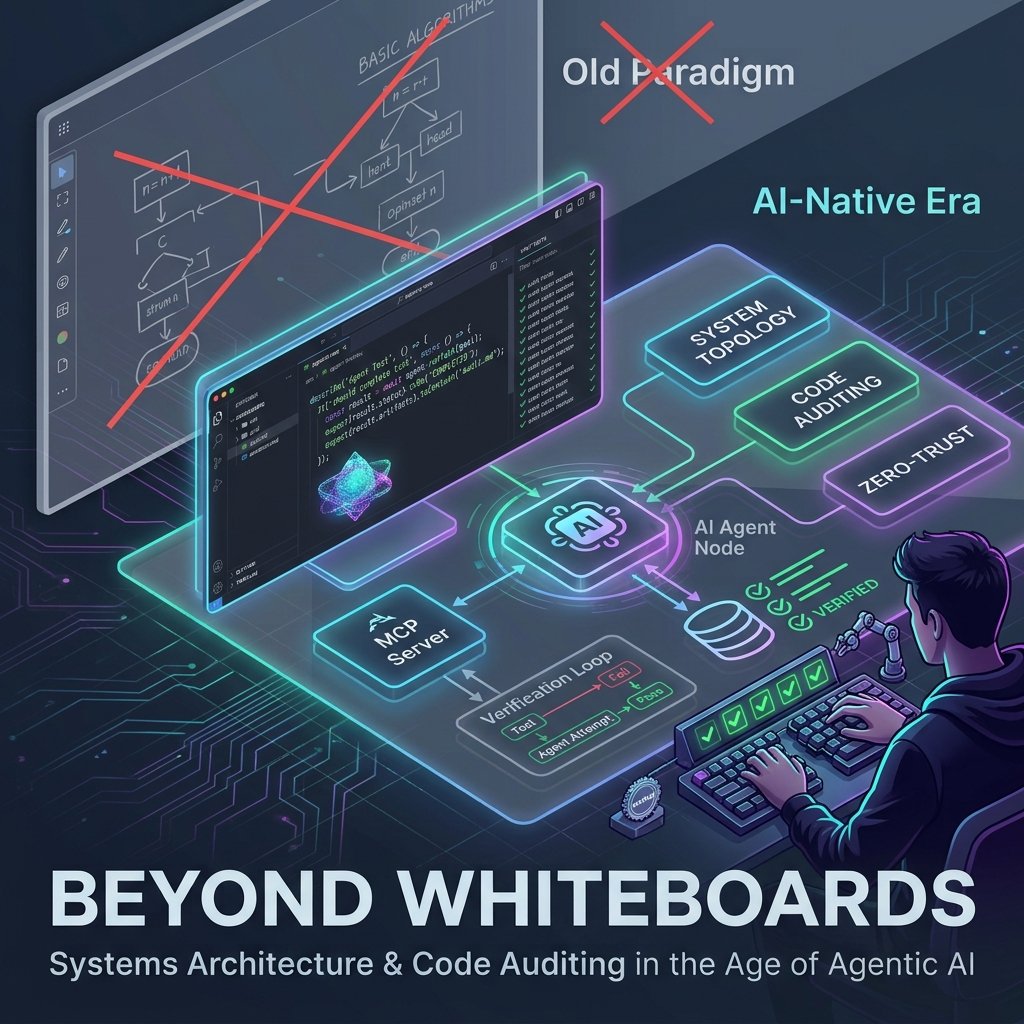
- The Agentic Verification Loop: Autonomous AI agents use automated test failures as actionable context loops to self-correct and refactor code iteratively.
- From Syntax Author to Contract Architect: A developer’s primary role evolves from manually writing function bodies to defining precise input-output contracts and boundary conditions.
- The Zero-Trust Code Principle: AI-generated code should never be committed to production without automated suite validation and edge-case assertion.
1. The Code Generation Paradox: High Output, Low Trust
Generative AI models excel at producing syntactically correct boilerplate code at unprecedented speed. However, this high velocity introduces a fundamental paradox: the easier it is to generate code, the harder it becomes to verify manually.
+-----------------------------------------------------------------------+
|                    THE CODE VERIFICATION PARADOX                     |
+-----------------------------------------------------------------------+
|  TRADITIONAL DEVELOPMENT           |  AGENTIC DEVELOPMENT             |
+------------------------------------+----------------------------------+
|  • Code generation is slow         |  • Code generation is instant    |
|  • Developer understands every line |  • Developer must audit AI code |
|  • Bugs are introduced manually    |  • Bugs are generated at scale   |
|  • Testing is added afterwards     |  • Testing must guide the AI     |
+-----------------------------------------------------------------------+
When developers attempt to verify AI-generated code line-by-line, they quickly run into cognitive fatigue. Reading 500 lines of generated code to catch an off-by-one error or an unhandled null pointer takes significantly longer than writing the logic by hand.
To solve this, modern computer science curricula teach students to invert their workflow: write the specification first, let the AI generate the implementation second, and let the test suite validate the result automatically.
[External Link Suggestion: Martin Fowler on Test-Driven Development -> https://martinfowler.com/bliki/TestDrivenDevelopment.html]
2. How TDD Acts as the Ultimate Steering Mechanism for AI Agents
When developers interact with AI models using natural language prompts, ambiguity is inevitable. Natural language is inherently imprecise. A prompt like “Build an authentication function that validates passwords” leaves dozens of edge cases unaddressed.
In contrast, a unit test written in code is entirely unambiguous. It specifies exact inputs, expected outputs, state changes, and exception handling.
┌──────────────────────────────────────────────────────────────────┐
│               THE AGENTIC RED-GREEN-REFACTOR LOOP                │
├──────────────────────────────────────────────────────────────────┤
│                                                                  │
│  ┌───────────────────────┐          ┌─────────────────────────┐  │
│  │  1. Human Writes Test  │ ────────►│  2. AI Agent Generates  │  │
│  │  (Define Contract)    │          │  Candidate Solution     │  │
│  └───────────────────────┘          └─────────────────────────┘  │
│                                                  │               │
│                                                  ▼               │
│  ┌───────────────────────┐          ┌─────────────────────────┐  │
│  │  4. Refactor & Lock   │ ◄────────│  3. Automated Suite     │  │
│  │  (Verify Performance) │          │  Runs (Pass / Fail)     │  │
│  └───────────────────────┘          └─────────────────────────┘  │
│                                                                  │
└──────────────────────────────────────────────────────────────────┘
The TDD Steering Loop in Action:
- Specify (Red): The student writes comprehensive unit tests covering happy paths, boundary conditions, and invalid inputs. The tests fail because no implementation exists yet.
- Synthesize (Green): The AI agent consumes the test suite alongside the system context (via tools like MCP Servers) and generates candidate code designed specifically to pass those tests.
- Self-Correct (Iterate): If the test runner returns failures, the AI agent reads the stack trace, adjusts its implementation, and reruns the suite automatically until all assertions pass.
- Refactor: The human developer reviews the passing implementation for memory efficiency, security, and maintainability.
TypeScript
// Step 1: Human Engineer Defines the Test Contract (Red State)
import { describe, it, expect } from 'vitest';
import { calculateDiscount } from './pricingEngine';

describe('calculateDiscount', () => {
  it('should apply 15% discount for tier 2 members on orders over $100', () => {
    const result = calculateDiscount({ memberTier: 2, orderTotal: 120.00 });
    expect(result).toBe(102.00);
  });

  it('should handle zero or negative order totals gracefully by throwing an Error', () => {
    expect(() => calculateDiscount({ memberTier: 1, orderTotal: -10.00 }))
      .toThrow('Invalid order total');
  });
});

// Step 2: Autonomous AI Agent generates code to satisfy this exact specification
By using TDD as the prompt interface, developers eliminate ambiguity and force the AI to meet rigid operational constraints.
3. Designing Test-First Curricula for Self-Taught and STEM Students
For self-taught developers and STEM students transitioning into software engineering, learning TDD first reshapes how they approach system design. Rather than jumping straight into syntax or UI components, students are trained to think in terms of invariants, pre-conditions, and post-conditions.
+--------------------------------------------------------------------+
|                VERIFICATION-DRIVEN LEARNING PATH                   |
+--------------------------------------------------------------------+
|  [Problem Statement]                                               |
|           │                                                        |
|           ▼                                                        |
|  [Contract Definition] ──► Identify inputs, outputs, and errors    |
|           │                                                        |
|           ▼                                                        |
|  [Test Harness Construction] ──► Write unit & property tests       |
|           │                                                        |
|           ▼                                                        |
|  [AI Agent Execution] ──► Generate passing implementation         |
|           │                                                        |
|           ▼                                                        |
|  [Adversarial Audit] ──► Inject edge cases & benchmark speed       |
+--------------------------------------------------------------------+
Core Pedagogical Shifts in Verification-Driven Training:
- Property-Based Testing: Students learn to use libraries like Fast-Check or Hypothesis to generate thousands of randomized inputs, forcing AI-generated code to handle extreme boundary cases.
- Contract-First Design: Students write formal type definitions and API contracts before invoking any code generation tools.
- Automated Regression Auditing: Every time an AI agent refactors a component, the entire test harness executes instantly to guarantee zero collateral breakage across microservices.
[Internal Link Suggestion: Modern Test Automation Frameworks for AI Workflows]
4. Practical Implementation: A Comparison Matrix of Development Paradigms
To understand how Verification-Driven Pedagogy changes daily engineering habits, consider how key tasks are handled across traditional, AI-assisted, and agentic TDD workflows:
| Engineering Task | Traditional Manual Coding | Naive AI Coding (Prompt-Only) | Verification-Driven (TDD + Agents) |
|---|---|---|---|
| Requirements Definition | Written in natural language documents. | Typed into chat prompts loosely. | Transformed into executable unit and integration test suites. |
| Code Generation | Written line-by-line by hand. | Generated instantly by AI, verified visually. | Generated by AI agents, validated deterministically by test runners. |
| Error Handling | Discovered during manual execution or post-deploy. | Often missed by LLM happy-path defaults. | Explicitly enforced by negative test assertions prior to code synthesis. |
| Refactoring Confidence | Low (risk of breaking untracked dependencies). | Medium (requires re-reading generated output). | High (instant feedback from automated test suite execution). |
5. Frequently Asked Questions (FAQ)
Doesn’t writing test suites first slow down the development process?
While writing tests first requires an upfront investment of thought, it dramatically increases net development velocity when working with AI models. Without a test harness, developers spend hours manually testing endpoints, debugging edge-case crashes, and re-prompting LLMs. Writing tests first allows AI agents to self-correct automatically in seconds.
How do I know if my test suite is thorough enough to prevent bad AI code?
Modern verification-driven workflows utilize mutation testing. Mutation testing tools alter small parts of your generated code (e.g., changing a < to a <=) to verify if your test suite catches the change. If a mutated line of code still passes your test suite, your tests contain blind spots that need strengthening.
Should beginners learn how to write functional code manually before learning TDD?
In a modern verification-driven framework, learning TDD and learning basic syntax happen concurrently. Writing assertions requires minimal syntax complexity, but forces the student to analyze state, types, and logic early. Once students understand how to specify assertions, they can evaluate both human-written and AI-generated code with equal confidence.
The Future of Coding Is Verification
As autonomous agents continue to assume the burden of routine syntax generation, the definition of what makes a developer “senior” is changing. Developer value no longer lies in how quickly one can type out functional loops or REST handlers.
The future belongs to the engineers who can define precise system constraints, construct comprehensive test harnesses, and guide autonomous AI agents toward safe, performant, and reliable software delivery.