Platform Engineering vs. DevOps: Building Internal Developer Platforms (IDPs)
Meta Description: Learn how Platform Engineering evolves DevOps. Discover Internal Developer Platforms (IDPs), cognitive load reduction, and developer self-service.
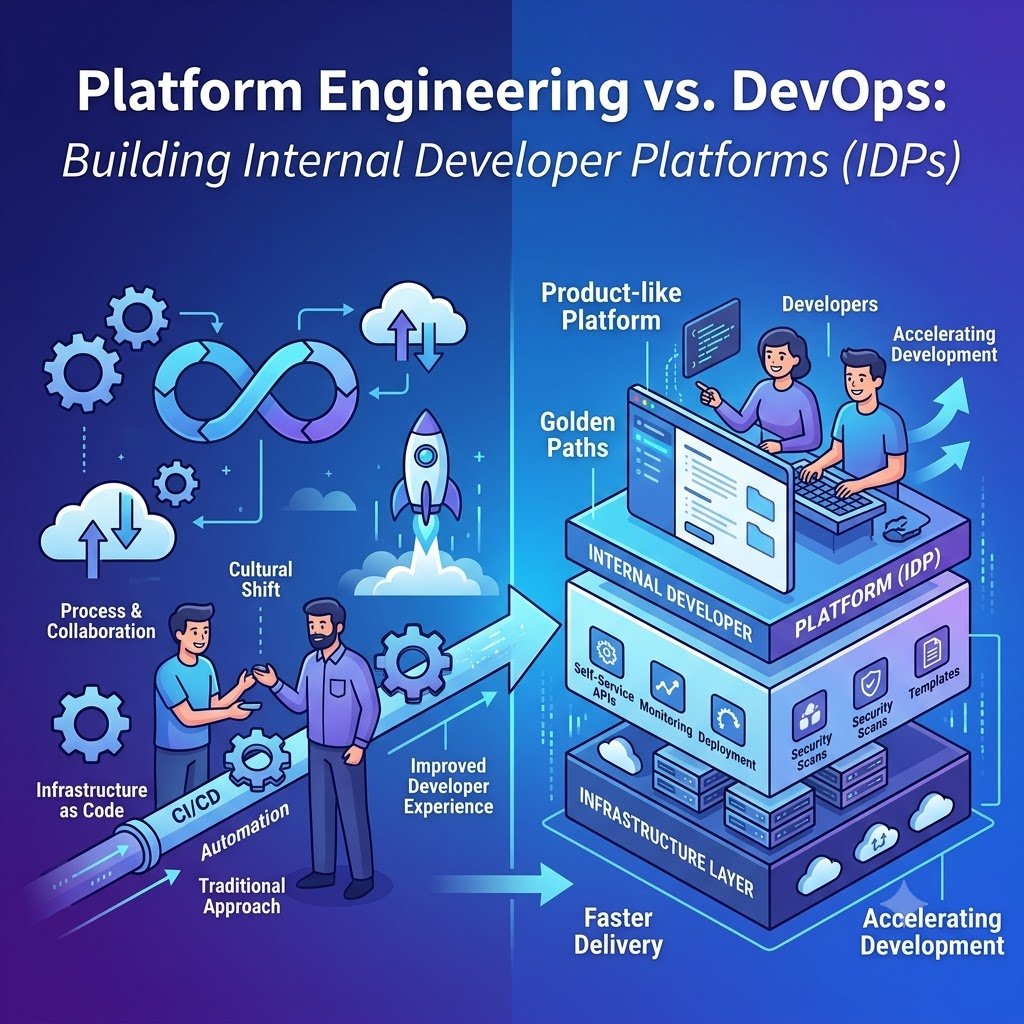
┌────────────────────────────────────────────────────────────────────────┐
│ THE EVOLUTION FROM DEVOPS TO PLATFORM ENG │
│ │
│ TRADITIONAL DEVOPS “YOU BUILD IT, YOU RUN IT” OVERHEAD │
│ ┌────────────────────────────────────────────────────────────────┐ │
│ │ Application Developer Cognitive Load │ │
│ │ App Logic + K8s Manifests + Terraform + IAM + CI/CD + Monitoring│ │
│ └───────────────────────────────┬────────────────────────────────┘ │
│ │ Creates Burnout & Velocity Drops │
│ ▼ │
│ PLATFORM ENGINEERING “GOLDEN PATH” IDP ARCHITECTURE │
│ ┌────────────────────────────────────────────────────────────────┐ │
│ │ Application Developer Self-Service Portal (Backstage / Port) │ │
│ └───────────────────────────────┬────────────────────────────────┘ │
│ │ Automated Workflows │
│ ▼ │
│ ┌────────────────────────────────────────────────────────────────┐ │
│ │ Platform Orchestration Layer (ArgoCD, Crossplane, Terraform) │ │
│ └────────────────────────────────────────────────────────────────┘ │
└────────────────────────────────────────────────────────────────────────┘
The enterprise cloud ecosystem has reached a turning point. A decade ago, the DevOps movement promised to tear down the wall between software development and IT operations under a simple mantra: “You build it, you run it.”
While the mindset shift eliminated traditional operational silos, it unexpectedly shifted immense operational overhead onto application developers.
To ship a basic microservice today, modern developers are often expected to master Docker containers, Kubernetes deployment manifests, Helm charts, Terraform infrastructure modules, IAM security policies, Prometheus alert rules, and complex CI/CD pipelines. This overwhelming complexity is called cognitive overload, and it slows down product delivery while causing developer burnout.
Enter Platform Engineering. Instead of expecting every developer to act as a certified cloud infrastructure expert, Platform Engineering teams treat the development infrastructure itself as a product.
By building Internal Developer Platforms (IDPs), platform engineers deliver frictionless “Golden Paths” that enable product developers to deploy, manage, and monitor infrastructure independently via clean self-service interfaces.
💡 Key Takeaways
- Shift from Mindset to Product: DevOps is an operational culture; Platform Engineering is the discipline of building productized infrastructure platform tools.
- Cognitive Load Reduction: IDPs abstract complex underlying cloud tooling, allowing application teams to focus on core product features.
- Golden Paths over Rigid Walls: Golden Paths offer automated, safe defaults while maintaining flexible access for edge-case infrastructure needs.
- Self-Service Orchestration: Modern platforms rely on developer portals (like Backstage) integrated with GitOps controllers (like ArgoCD) and infrastructure declarators (like Crossplane).
Why Cognitive Load Is Killing Developer Productivity
In software engineering, cognitive load represents the total amount of mental effort required to process information and complete tasks. Cognitive load splits into three primary categories:
┌────────────────────────────────────────────────────────────────────────┐
│ TYPES OF COGNITIVE LOAD │
│ │
│ 1. Intrinsic Load : Core programming knowledge (Language, Patterns) │
│ 2. Germane Load : Domain logic (Payment processing, Business ops) │
│ 3. Extrinsic Load : Infrastructure noise (YAML, IAM, K8s debugging) │
└────────────────────────────────────────────────────────────────────────┘
When developers spend 40% of their working hours wrestling with broken Kubernetes ingress annotations, pipeline permissions, or mismatched Terraform state files, their capacity to solve core business problems drops significantly.
DEVOPS VS. PLATFORM ENGINEERING
│
┌────────────────────────────────┴────────────────────────────────┐
▼ ▼
┌──────────────────────────────┐ ┌──────────────────────────────┐
│ Traditional DevOps Model │ │ Platform Engineering Model │
│ “Ticket-Ops” or “Do-It-All” │ │ Productized Developer Ops │
├──────────────────────────────┤ ├──────────────────────────────┤
│ Developers manage raw YAML │ │ Devs interact with simplified│
│ files, Cloud APIs, and IAM │ │ IDP portals & CLI abstractions│
│ │ │ │
│ Central Ops becomes a bottleneck│ │ Platform team provides │
│ servicing manual tickets │ │ automated “Golden Paths” │
└──────────────────────────────┘ └──────────────────────────────┘
Platform Engineering fixes this imbalance by minimizing Extrinsic Load, placing infrastructure complexity behind self-service abstractions.
Anatomy of an Internal Developer Platform (IDP)
An Internal Developer Platform is not a single off-the-shelf software purchase. An IDP is a curated ecosystem composed of five architectural layers:
┌────────────────────────────────────────────────────────────────────────┐
│ INTERNAL DEVELOPER PLATFORM (IDP) │
│ │
│ 1. Developer Control Plane (Portals, Catalogs, IDP UI, CLIs) │
│ ┌────────────────────────────────────────────────────────────────┐ │
│ │ Backstage / Port / Internal Service Catalogs / Developer CLI │ │
│ └───────────────────────────────┬────────────────────────────────┘ │
│ │ Invokes Intent Requests │
│ ▼ │
│ 2. Integration & Orchestration Layer │
│ ┌────────────────────────────────────────────────────────────────┐ │
│ │ ArgoCD / Crossplane / Terraform Cloud / GitHub Actions │ │
│ └───────────────────────────────┬────────────────────────────────┘ │
│ │ Provisioning Commands │
│ ▼ │
│ 3. Security & Governance Layer │
│ ┌────────────────────────────────────────────────────────────────┐ │
│ │ Open Policy Agent (OPA) / Kyverno / HashiCorp Vault / Wiz │ │
│ └───────────────────────────────┬────────────────────────────────┘ │
│ │ Validates & Encrypts │
│ ▼ │
│ 4. Infrastructure Runtime Layer │
│ ┌────────────────────────────────────────────────────────────────┐ │
│ │ AWS / Azure / Google Cloud / Kubernetes Clusters / Serverless │ │
│ └────────────────────────────────────────────────────────────────┘ │
└────────────────────────────────────────────────────────────────────────┘
The 4 Core Layers of an IDP
- Developer Control Plane: The primary interface (GUI, CLI, or API) where developers register microservices, view service dependencies, request infrastructure, and inspect application deployment logs.
- Integration & Orchestration: The engine that translates high-level developer intents into infrastructure actions using GitOps principles.
- Security & Policy Guardrails: Automated policy engines that validate compliance, enforce security rules, and inspect configurations before deployment.
- Infrastructure Runtime: The underlying cloud environments, serverless nodes, database engines, and networking hardware housing the workloads.
Hands-On Implementation: Declarative Cloud Infrastructure with Crossplane & Kubernetes
Let’s build a platform component that abstracts complex infrastructure.
Instead of forcing application developers to write raw Terraform modules or AWS SDK code to provision an Amazon S3 Storage Bucket, platform engineers expose a clean, custom Kubernetes resource definition (CompositeResourceDefinition or XRD) using Crossplane.
Step 1: Platform Team Defines the Infrastructure Contract (definition.yaml)
The platform team creates an abstraction contract specifying only the inputs application teams need to supply:
YAML
apiVersion: apiextensions.crossplane.io/v1
kind: CompositeResourceDefinition
metadata:
name: xobjectstores.platform.enterprise.io
spec:
group: platform.enterprise.io
names:
kind: XObjectStore
plural: xobjectstores
claimNames:
kind: ObjectStoreClaim
plural: objectstoreclaims
versions:
– name: v1alpha1
served: true
storage: true
schema:
openAPIV3Schema:
type: object
properties:
spec:
type: object
properties:
storageGB:
type: integer
minimum: 5
maximum: 1000
environment:
type: string
enum: [“development”, “staging”, “production”]
required:
– storageGB
– environment
Step 2: Application Developer Provisions Infrastructure via Clean Self-Service (app-claim.yaml)
Now, an application developer can request cloud storage without managing AWS IAM roles, encryption keys, or S3 configuration blocks. They deploy a minimal manifest directly through their service catalog or GitOps pipeline:
YAML
apiVersion: platform.enterprise.io/v1alpha1
kind: ObjectStoreClaim
metadata:
name: payment-receipts-bucket
namespace: payment-service-dev
spec:
storageGB: 50
environment: “development”
What Happens Behind the Scenes?
When this claim is committed:
- Crossplane catches the custom resource inside the platform cluster.
- The platform’s underlying composition template provisions an encrypted AWS S3 bucket, sets lifecycle deletion rules, configures RBAC policies, and injects connection credentials directly into the application’s Kubernetes namespace.
- The developer gets their storage resource in seconds—fully compliant with security standards by default.
Measuring Developer Experience (DevEx) & Platform ROI
Building an Internal Developer Platform requires engineering time and resources. To evaluate platform investments, engineering leaders track three key metrics frameworks:
┌────────────────────────────────────────────────────────────────────────┐
│ PLATFORM METRICS MATRIX │
│ │
│ ┌───────────────────────┐ ┌───────────────────────┐ ┌───────────┐ │
│ │ DORA Metrics │ │ SPACE Framework │ │ Platform │ │
│ │ • Deployment Frequency│ │ • Satisfaction │ │ Adoption │ │
│ │ • Change Failure Rate │ │ • Efficiency & Flow │ │ • Golden │ │
│ │ • Lead Time for Change│ │ • Communication │ │ Path % │ │
│ └───────────────────────┘ └───────────────────────┘ └───────────┘ │
└────────────────────────────────────────────────────────────────────────┘
Key Performance Indicators (KPIs) for Platform Teams
| Strategic Metric | Pre-Platform (Manual / Ticket Ops) | Post-Platform (IDP Golden Paths) |
| Onboarding Time | 2–3 Weeks (Manual access requests) | < 2 Hours (Template initialization) |
| Provisioning Time | 3–5 Days (Ticket submitted to Ops) | < 5 Minutes (Self-service GitOps claim) |
| Golden Path Adoption | < 20% (Fragmented individual setups) | > 85% (Standardized enterprise-wide) |
| Change Failure Rate | High (Human error in manual YAML) | Near Zero (Automated compliance gates) |
Frequently Asked Questions (FAQ)
Does Platform Engineering make traditional DevOps engineers obsolete?
No. Platform Engineering represents the evolutionary next step for DevOps practitioners. SREs and DevOps engineers leverage their systems expertise to join Platform Teams, building internal tools and automated infrastructure products rather than repeatedly answering manual ticket requests.
What is the difference between a “Golden Path” and a “Golden Cage”?
A Golden Path is an optimized, fully automated route that makes doing the right thing the easiest choice for developers. However, it remains flexible: if an application team has unique requirements, the platform allows them to step off the Golden Path to build custom solutions. A Golden Cage, by contrast, forces strict rules that block developers when off-standard edge cases arise.
Should small startups build an Internal Developer Platform?
Generally, no. Early-stage startups (fewer than 20–30 engineers) should prioritize shipping core products using managed Platform-as-a-Service (PaaS) solutions like Vercel, Render, or Heroku. Internal Developer Platforms typically deliver the highest return on investment for organizations scaling beyond 50+ developers, where infrastructure fragmentation and ticket bottlenecks start slowing team velocity.
Conclusion & Action Steps
Platform Engineering resolves the cognitive overload created by complex cloud environments. By treating platform infrastructure as an internal product, organizations deliver standardized Golden Paths that empower developers to deploy code safely and efficiently.
Next Steps for Engineering Leaders:
- Conduct Cognitive Load Audits: Survey product developers to identify top infrastructure friction points and ticket bottlenecks.
- Build a Service Catalog: Introduce an open-source portal like Spotify Backstage or Port to centralize documentation, service ownership, and API contracts.
- Automate One Golden Path: Identify a frequent request—such as provisioning a new microservice with a database—and build an automated self-service workflow for it.