Zero-Trust Security Architecture for Microservices and Kubernetes
Meta Description: Master Zero-Trust security for Kubernetes and microservices. Learn mutual TLS (mTLS) with Istio, eBPF kernel auditing with Cilium, and least-privilege RBAC.
┌────────────────────────────────────────────────────────────────────────┐
│ PERIMETER SECURITY VS. ZERO-TRUST │
│ │
│ TRADITIONAL “CASTLE-AND-MOAT” SECURITY │
│ ┌────────────────────────────────────────────────────────────────┐ │
│ │ External Network Perimeter Firewall │ │
│ │ ┌──────────────────────────────────────────────────────────┐ │ │
│ │ │ Trusted Internal Network (Implicit Trust) │ │ │
│ │ │ Pod A ───────(Unencrypted / No Auth)───────> Pod B │ │ │
│ │ └──────────────────────────────────────────────────────────┘ │ │
│ └────────────────────────────────────────────────────────────────┘ │
│ │
│ ZERO-TRUST SECURITY MODEL (“NEVER TRUST, ALWAYS VERIFY”) │
│ ┌────────────────────────────────────────────────────────────────┐ │
│ │ Pod A ──[mTLS Cryptographic Identity]──> [SPIFFE ID] ──> Pod B │ │
│ │ │ │ │ │
│ │ └─── Validated via L7 Policy & eBPF Kernel Probe ───┘ │ │
│ └────────────────────────────────────────────────────────────────┘ │
└────────────────────────────────────────────────────────────────────────┘
The era of perimeter-based network security is officially over. Historically, corporate security architectures relied on a “castle-and-moat” model: erect a rigid firewall boundary around the internal network, treat every actor outside as untrusted, and assume every system inside the perimeter is inherently trustworthy.
Modern microservice architectures and cloud-native Kubernetes environments shatter this boundary. In a containerized cloud ecosystem, thousands of short-lived microservices communicate across dynamic IP addresses, multi-region clusters, and public cloud infrastructure.
If an attacker gains access through a single vulnerable dependency or misconfigured container, the perimeter model allows them to move laterally across internal networks without resistance.
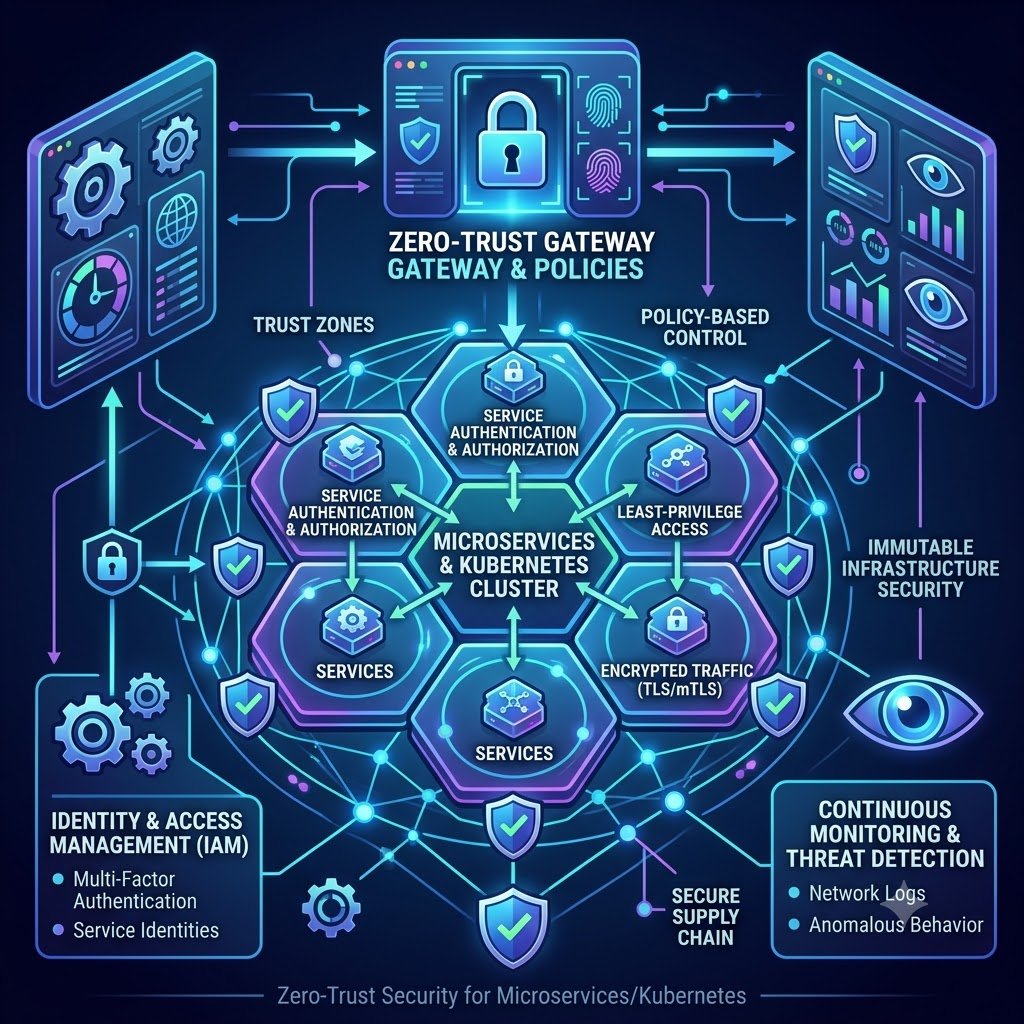
To protect cloud-native systems, software engineering teams must implement a Zero-Trust Security Architecture. Built on the guiding principle of “Never Trust, Always Verify,” Zero-Trust removes implicit network trust entirely. Every connection request—whether originating from an external API call or an internal pod-to-pod microservice interaction—must be explicitly authenticated, authorized, and encrypted.
💡 Key Takeaways
- Identity Over Networks: Zero-Trust moves security controls away from static IP address ranges toward cryptographic workload identity (such as SPIFFE IDs).
- Mutual TLS (mTLS): Service meshes automatically enforce mutual TLS encryption and identity verification for all internal pod-to-pod communication.
- eBPF-Powered Kernel Security: Monitoring network traffic and system calls inside the Linux kernel via eBPF delivers deep security observability with negligible overhead.
- Least-Privilege RBAC: Strict Role-Based Access Control limits container capabilities, filesystem access, and API server interactions to reduce attack surfaces.
The Three Core Pillars of Zero-Trust Microservices
Implementing Zero-Trust across Kubernetes clusters relies on three foundational engineering primitives:
┌────────────────────────────────────────────────────────────────────────┐
│ THE THREE PILLARS OF ZERO-TRUST │
│ │
│ 1. Workload Identity & Encryption (SPIFFE / mTLS Service Mesh) │
│ ┌────────────────────────────────────────────────────────────────┐ │
│ │ Authenticates service identities via short-lived X.509 certs │ │
│ └───────────────────────────────┬────────────────────────────────┘ │
│ │ Enforces Access Control │
│ ▼ │
│ 2. Fine-Grained Authorization (Layer 7 Network Policies) │
│ ┌────────────────────────────────────────────────────────────────┐ │
│ │ Restricts pod calls based on HTTP methods, paths, and RBAC │ │
│ └───────────────────────────────┬────────────────────────────────┘ │
│ │ Runtime Kernel Protection │
│ ▼ │
│ 3. Continuous Runtime Observability (eBPF Kernel Probing) │
│ ┌────────────────────────────────────────────────────────────────┐ │
│ │ Intercepts system calls directly in the Linux kernel │ │
│ └────────────────────────────────────────────────────────────────┘ │
└────────────────────────────────────────────────────────────────────────┘
1. Cryptographic Workload Identity (SPIFFE/SPIRE)
In dynamic cloud environments, IP addresses change constantly as pods scale up and down. Zero-Trust attaches cryptographic identities to workload instances using the SPIFFE (Secure Production Identity Framework for Everyone) standard. A workload receives a unique URI string (e.g., spiffe://cluster.local/ns/prod/sa/payment-service) embedded within a short-lived X.509 certificate.
2. Mutual TLS (mTLS) Encryption
Standard TLS validates the identity of the server to the client. Mutual TLS (mTLS) requires both parties to validate each other’s cryptographic X.509 certificates before opening a connection. This setup guarantees that data in transit remains fully encrypted while confirming the exact identity of both calling and receiving microservices.
3. Least-Privilege Authorization Policies
Authenticating identity is only half the battle; systems must also enforce least-privilege authorization. An authenticated analytics-service should be allowed to issue HTTP GET requests to the /metrics endpoint of order-service, while HTTP POST or DELETE requests are blocked automatically.
Implementing Strict mTLS and Layer 7 Authorization with Istio
A service mesh like Istio injects lightweight sidecar proxies alongside application containers to manage mTLS encryption and authorization policies transparently, without requiring application code changes.
┌────────────────────────────────────────────────────────────────────────┐
│ ISTIO SIDECAR MTLS INTERCEPTION │
│ │
│ PAYMENT POD ORDER POD │
│ ┌──────────────────────────┐ ┌──────────────────────┐ │
│ │ Application Code │ │ Application Code │ │
│ └────────────┬─────────────┘ └──────────▲───────────┘ │
│ │ Unencrypted Localhost │ │
│ ▼ │ │
│ ┌──────────────────────────┐ Encrypted mTLS ┌───────┴───────────┐ │
│ │ Envoy Proxy Sidecar ├────────────────>│ Envoy Proxy Sidecar│ │
│ │ (Attaches X.509 Cert) │ │ (Verifies Identity)│ │
│ └──────────────────────────┘ └───────────────────┘ │
└────────────────────────────────────────────────────────────────────────┘
Step 1: Enforce Global Strict mTLS
Deploying this PeerAuthentication manifest forces all pod-to-pod communication within the targeted namespace to execute over encrypted mTLS connections, immediately rejecting plain-text HTTP traffic:
YAML
apiVersion: security.istio.io/v1beta1
kind: PeerAuthentication
metadata:
name: default-strict-mtls
namespace: production
spec:
mtls:
mode: STRICT
Step 2: Configure Fine-Grained Layer 7 Authorization Policies
Next, apply an AuthorizationPolicy manifest that restricts access to the order-service. This policy allows only the verified payment-service service account to issue HTTP POST requests to the /api/v1/orders endpoint:
YAML
apiVersion: security.istio.io/v1beta1
kind: AuthorizationPolicy
metadata:
name: order-service-rbac
namespace: production
spec:
selector:
matchLabels:
app: order-service
action: ALLOW
rules:
– from:
– source:
principals: [“cluster.local/ns/production/sa/payment-service-sa”]
to:
– operation:
methods: [“POST”]
paths: [“/api/v1/orders”]
If an unauthorized pod (such as a compromised frontend-service) attempts to invoke this endpoint, the Envoy proxy sidecar intercepts the request and drops it instantly with an HTTP 403 Forbidden error before it ever reaches the application container.
Runtime Kernel Protection with eBPF and Cilium
While sidecar proxies excel at Layer 7 application routing, sophisticated attacks often bypass the network layer entirely—attempting privilege escalation, unauthorized process execution, or raw socket injection directly within the Linux kernel.
This is where eBPF (Extended Berkeley Packet Filter) transforms cloud security.
┌────────────────────────────────────────────────────────────────────────┐
│ EBPF KERNEL AUDITING ARCHITECTURE │
│ │
│ User Space │
│ ┌────────────────────────────────────────────────────────────────┐ │
│ │ Application Pods / Microservices │ │
│ └───────────────────────────────┬────────────────────────────────┘ │
│ │ Invokes System Calls (execve) │
│ Linux Kernel Space ▼ │
│ ┌────────────────────────────────────────────────────────────────┐ │
│ │ eBPF Probe Hook (kprobe / tracepoints) │ │
│ │ ├── Intercepts malicious behavior instantly │ │
│ │ └── Passes telemetry directly to Cilium Security Engine │ │
│ └────────────────────────────────────────────────────────────────┘ │
└────────────────────────────────────────────────────────────────────────┘
By embedding sandboxed programs directly inside the Linux kernel, eBPF-powered platforms like Cilium observe system calls, file access events, and network packets with high efficiency and no sidecar proxy overhead.
Declarative eBPF Security Policy (cilium-network-policy.yaml)
This Cilium Network Policy operates at both network (Layer 3/4) and application (Layer 7) layers while inspecting system calls directly via kernel hooks:
YAML
apiVersion: “cilium.io/v2”
kind: CiliumNetworkPolicy
metadata:
name: secure-database-access
namespace: production
spec:
endpointSelector:
matchLabels:
app: postgres-database
ingress:
– fromEndpoints:
– matchLabels:
app: order-service
toPorts:
– ports:
– port: “5432”
protocol: TCP
rules:
dns:
– matchPattern: “*.internal.enterprise.io”
Hardening Kubernetes Pod Security Standards (PSS)
Zero-Trust requires hardening the underlying runtime containers to prevent privilege escalation attacks.
The Kubernetes Pod Security Admission framework defines three built-in profiles:
┌────────────────────────────────────────────────────────────────────────┐
│ POD SECURITY STANDARDS (PSS) │
│ │
│ 1. Privileged : Unrestricted access (Only for cluster infrastructure)│
│ 2. Baseline : Default safe profile (Blocks known escalations) │
│ 3. Restricted : Hardened profile (Enforces strict security rules) │
└────────────────────────────────────────────────────────────────────────┘
Restricted Security Profile Checklist
To conform to the Restricted security standard, workloads must adhere to these configuration constraints:
YAML
apiVersion: v1
kind: Pod
metadata:
name: hardened-microservice
namespace: production
spec:
securityContext:
runAsNonRoot: true
runAsUser: 10001
seccompProfile:
type: RuntimeDefault
containers:
– name: app
image: enterprise.registry.io/app:v2.1.0
securityContext:
allowPrivilegeEscalation: false
readOnlyRootFilesystem: true
capabilities:
drop:
– ALL
Key Security Directives
- runAsNonRoot: true: Prevents the container process from running with root privileges ($UID=0$).
- readOnlyRootFilesystem: true: Blocks malware from writing persistent binaries to disk by locking down the container root filesystem.
- allowPrivilegeEscalation: false: Stops child processes from gaining elevated permissions relative to their parent process.
- capabilities.drop: [“ALL”]: Drops standard Linux kernel capabilities, turning off unnecessary low-level system privileges.
Frequently Asked Questions (FAQ)
What is the performance impact of enforcing strict mTLS on microservices?
Modern service mesh implementations (such as Istio using Envoy or Cilium using eBPF) add minimal latency—typically less than 1 to 2 milliseconds per request. Modern CPU hardware acceleration for AES-GCM encryption ensures cryptographic processing introduces negligible operational overhead.
How does eBPF architecture compare to traditional sidecar proxies?
Traditional sidecar architectures run a proxy process (like Envoy) inside every application pod. This proxy intercepts incoming and outgoing network traffic at the user-space boundary, which consumes additional RAM and CPU per pod.
eBPF operates directly inside the Linux kernel layer, removing the need for sidecar proxies for Layer 3/4 network security, which dramatically lowers resource consumption across large clusters.
What is the difference between Authentication (AuthN) and Authorization (AuthZ) in Zero-Trust?
- Authentication (AuthN): Confirms who an entity is. In Zero-Trust microservices, AuthN uses cryptographic SPIFFE identities and X.509 certificates to verify workload identities reliably.
- Authorization (AuthZ): Confirms what an authenticated entity is allowed to do. AuthZ rules specify whether a verified service can access particular URLs, HTTP verbs, or database tables.
Conclusion & Action Steps
Adopting a Zero-Trust security model is essential for protecting modern Kubernetes clusters and distributed microservices against sophisticated cyber threats. By removing implicit network trust and combining workload identity verification, mutual TLS encryption, eBPF kernel auditing, and strict least-privilege pod policies, engineering teams build resilient systems that isolate and mitigate potential security breaches automatically.
Next Steps for Security Engineers:
- Enforce Pod Security Standards: Apply the restricted Pod Security Admission mode to your non-system Kubernetes namespaces.
- Audit Internal Pod Communications: Deploy Istio or Linkerd in audit mode to trace unencrypted internal traffic paths across microservices.
- Upgrade to Strict mTLS: Enable strict mTLS configuration to ensure all internal pod-to-pod communications are authenticated and encrypted by default.